
Five of the Best Flooring Types for Your Home
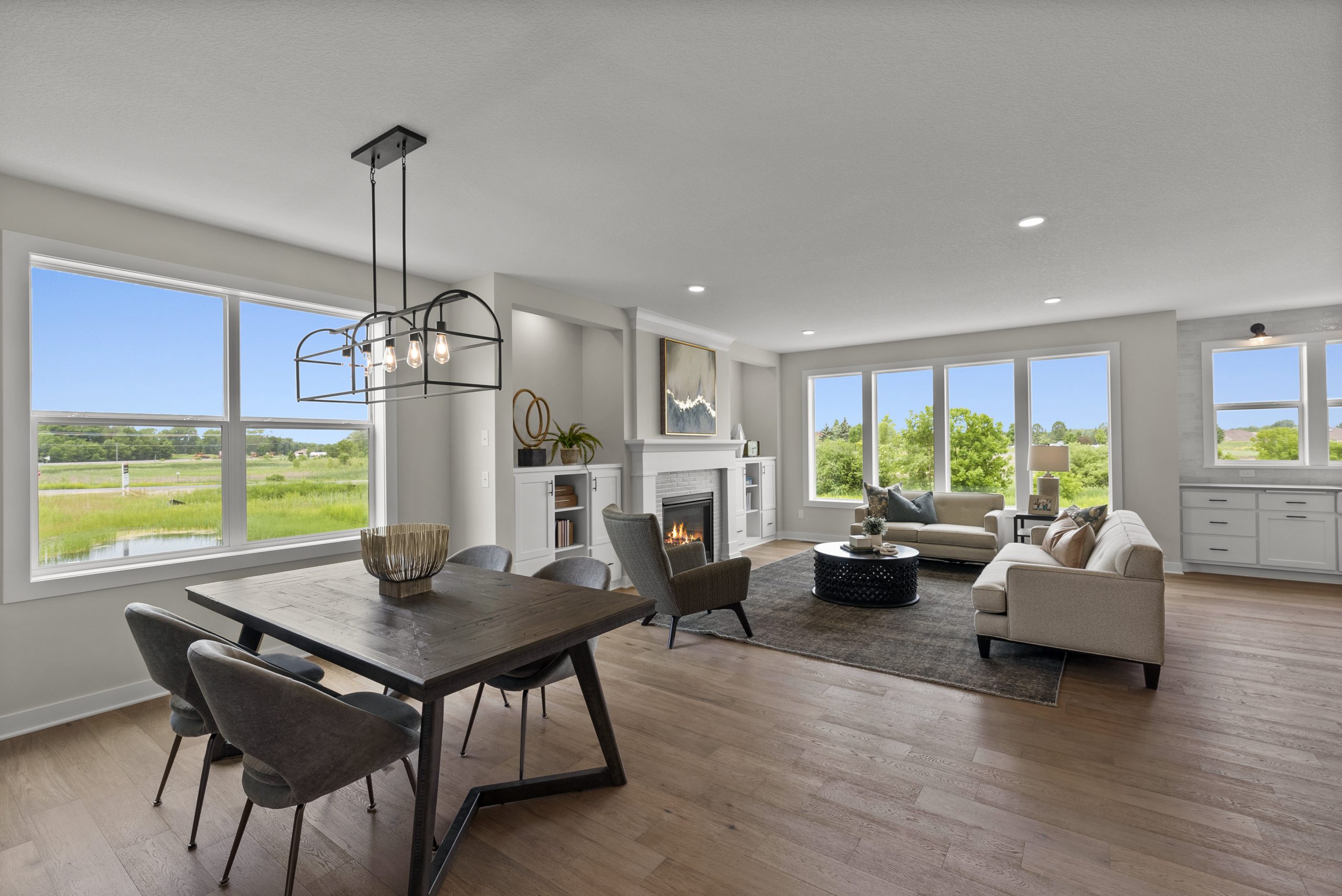
Choosing the right flooring for your home can feel daunting when faced with so many options. Each material has its own benefits and drawbacks, and what you choose is largely dependent on your personal preferences and needs. In today’s blog, we’ll provide an overview of five of the most common types of flooring and the pros and cons of each.
Solid Hardwood
Solid hardwood flooring is timeless and beautiful, and many other types of flooring attempt to mimic its appearance. It’s quite sturdy, and with proper care, it can last decades.
But wood flooring can develop scratches, dents, and water damage over time. Its color can also fade from sunlight exposure. That’s where refinishing comes in. A solid wood floor is generally thick enough to be sanded off and refinished five to seven times.
Solid wood tends to expand and contract in changing humidity levels.
Because of its susceptibility to water damage, it’s not recommended for damp basements.
Solid wood flooring also tends to be one of the most expensive flooring options, but many homeowners consider it a worthy investment.
Engineered Wood
Engineered wood uses a thin veneer of real hardwood over a base of high-quality plywood. It’s often considered to be a more affordable and sometimes more durable alternative to solid wood.
Its varied structure makes it more resistant to humidity and warping than solid wood. Many engineered wood options are also available with waterproof and scratch-resistant finishes, making them ideal for high-traffic areas like kitchens, bathrooms, and hallways.
Unlike solid wood, engineered wood can only be refinished once or twice, and some varieties can’t be refinished at all. So, if the wood veneer is scratched or discolored by sun exposure, your repair options may be limited.
Laminate
Laminate is a durable, low-maintenance, budget-friendly flooring option that has become quite popular in homes. It consist of a sturdy fiberboard base, a photographic image layer, and a transparent wear layer over the top.
It requires less maintenance than wood flooring options, and it generally resists scratches and sunlight-induced fading better, too. Waterproof options are also available. It cannot be refinished, however.
The photographic image layer can effectively mimic many types of wood and stone, with some options offering deep embossing for a realistic 3D effect. But its faux appearance becomes noticeable upon closer inspection.
Laminate flooring may flex a little underfoot, but it can also feel softer and more comfortable, depending on your personal preference.
Although it doesn’t share solid wood’s prestige as a premium material, laminate is an affordable, practical option that will last a good 10 to 20 years.
Vinyl
Vinyl is another affordable option that offers even better durability than laminate. Made of 100% synthetic plastic, vinyl is waterproof and highly resistant to dents, scratches, stains, and fading. The printed image layer may not be as realistic as that of laminate, however.
Vinyl is easy to clean and maintain since it can be wet-mopped and scrubbed, while other flooring options require gentler dry-cleaning methods.
Its waterproof nature makes it well-suited for bathrooms and kitchens, and its plastic composition keeps it from warping due to temperature fluctuations.
Vinyl flooring generally comes in three options: luxury vinyl planks (LVP), which mimic wood; luxury vinyl tile (LVT), which mimics stone; and basic sheet vinyl.
Tile (ceramic, porcelain, stone)
Although expensive, tile is beautiful, durable, and waterproof. It’s usually used in wet or damp rooms, such as kitchens, bathrooms, basements, and laundry rooms.
Tiles are low-maintenance. It’s also easy to replace single tiles if they do become damaged, saving you from replacing the entire floor.
The most common floor tiles are made of ceramic, porcelain, or stone. Ceramic is made of clay and offers a softer feel underfoot. Porcelain is more durable, less porous, and more waterproof than ceramic. Natural stone tile includes materials like granite, marble, and slate. Natural stone carries a luxurious beauty, but it’s also less durable and more expensive than ceramic and porcelain.
Choose the Right Flooring for Every Room in Your Home
As we’ve seen, the many types of flooring available each have their own benefits and uses. For instance, you may want to use an elegant solid wood floor in your main living area, tile in the bathroom, and vinyl in the basement. It all depends on your preferences and needs, and only you can decide what’s best for each area of your home.
If you’re interested in building a truly custom home where every choice is yours, Hanson Builders can help. We prioritize our client’s vision in each custom home that we build, giving you control over every detail. Contact us to learn more.


